
Gold vs Silver: What Could These Two Metals Look Like by 2035?
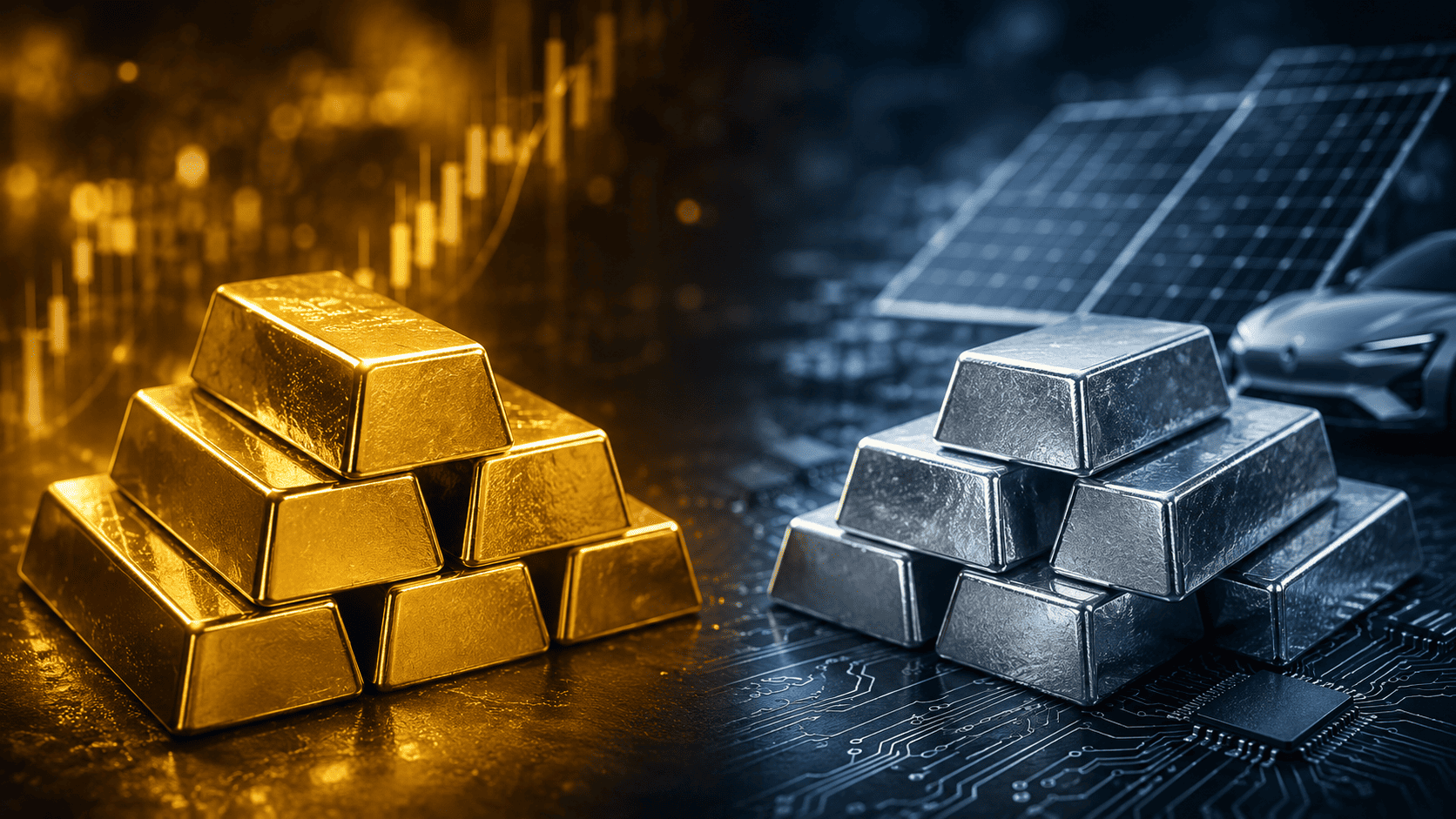
Gold and silver have been stores of wealth for thousands of years, but by 2035 they may be valued for very different reasons. Gold is increasingly becoming a strategic financial asset held by investors and central banks, while silver is becoming increasingly important to the physical economy through electronics, power grids, automobiles, solar energy and AI infrastructure. The interesting part is just how limited both metals are.
How Much Gold Do We Actually Have?
According to the World Gold Council, humanity has mined approximately 220,700 tonnes of gold throughout history. Melt all of it together and it would form a cube only around 22.5 metres on each side — barely longer than a cricket pitch. Around two-thirds of all the gold ever mined has actually been extracted since 1950.
Now compare that with what is still economically available underground. The US Geological Survey estimates current global gold reserves at approximately 66,000 tonnes. That means humanity has already mined more than three times the quantity presently classified as economically recoverable reserves.
Gold SnapshotApproximate QuantityGold mined throughout history220,700 tonnesCurrent known economic reserves66,000 tonnesGold mined in 20253,672 tonnesCentral-bank purchases in 2025863 tonnes
At today's production rate, 66,000 tonnes represents roughly 18 years of current mine production. This does not mean gold will disappear in 18 years—higher prices, exploration and technology can convert additional resources into economic reserves—but it demonstrates how slowly the available supply can expand.
The demand side is equally interesting. Central banks purchased 863 tonnes of gold in 2025, equivalent to almost one-quarter of the gold mined globally that year. Total gold investment demand reached 2,175 tonnes, while overall demand exceeded 5,000 tonnes for the first time.
This could become gold's defining story through 2035. Gold does not need to replace the US dollar to become more valuable strategically. If central banks simply decide they want a slightly greater percentage of their reserves held in an asset that is nobody else's liability, demand can remain structurally strong while mine supply responds only slowly.
Silver Is a Completely Different Story
Silver is much more abundant than gold, but it is also consumed very differently.
The USGS estimates that approximately 1.74 million tonnes of silver have been discovered worldwide. Put all of that silver together and it would form a cube approximately 55 metres on each side. Current economically recoverable silver reserves are estimated at roughly 610,000 tonnes, while global mines produced approximately 26,000 tonnes in 2025.
So by weight, the world currently mines roughly seven times more silver than gold every year. But unlike gold, much of that silver does not end up sitting in vaults.
In 2025 alone, industrial applications consumed approximately 657.4 million ounces, or 20,446 tonnes, of silver. That is equivalent to roughly 78% of the year's global silver mine production.
That number explains why silver's 2035 story could become so different from gold.
Gold is primarily accumulated.
Silver is increasingly consumed.
Silver is used across electrical equipment, electronics, automobiles, power grids, solar cells, data centres and AI-related infrastructure. Even after industrial silver demand declined slightly in 2025 because solar manufacturers reduced the amount of silver used per cell, global silver demand still exceeded supply for the fifth consecutive year. The Silver Institute expects the market to remain in deficit for a sixth year in 2026.
Another complication is supply. Much of the world's silver is not produced from dedicated silver mines; it comes as a by-product of mining lead, zinc, copper and gold. This means a rising silver price does not automatically produce a proportional increase in silver mining.
Gold vs Silver by 2035
This is where the investment argument becomes interesting.
Gold's scarcity is monetary. Silver's scarcity could become industrial.
By 2035, gold could increasingly be viewed as financial insurance against sovereign debt, currency depreciation, geopolitical fragmentation and instability in the global financial system. Central banks already collectively hold tens of thousands of tonnes, and their continued purchases indicate that gold's role in national reserves remains very much alive.
Silver could move in another direction. As electricity becomes a larger part of transportation, manufacturing and energy systems—and as AI requires increasingly enormous physical computing and power infrastructure—silver's electrical conductivity makes it strategically valuable.
The numbers make the distinction clearer:
220,700 tonnes of gold have been mined in all of human history.
Yet global central banks bought 863 tonnes in just one year.
For silver, approximately 26,000 tonnes were mined in 2025, while industrial applications alone absorbed more than 20,000 tonnes.
This is why Nivesh Street would not view gold and silver as the same trade heading towards 2035.
Gold could become increasingly valuable because people and governments want to hold it. Silver could become increasingly valuable because the world needs to use it.
There are risks. New discoveries can increase reserves, recycling will respond to higher prices, solar manufacturers are already reducing silver content, alternative materials could replace silver in some applications, and both metals can experience extreme price cycles.
But scarcity does not require the world to literally "run out" of gold or silver for prices to react. Commodity markets move when new demand grows faster than new supply can respond.
And that may be the far more important question for 2035.
For gold: How much more will central banks and investors want to own?
For silver: How much more will the technological economy need to consume?
Those two questions could define the next decade for precious metals.
Disclaimer: This article is for informational and educational purposes only and does not constitute investment advice. Commodity prices can be highly volatile, and investors should conduct independent research before making investment decisions.