
ETMarkets Smart Talk | Investors want more than trading apps; they want a partner in their wealth journey: Shripal Shah
Listen to this article in summarized format
 ETMarkets.com
The transition to Kotak Neo builds on three decades of experience, with over ₹12,000 crore in net worth and ₹17 lakh crore in DP assets.
The transition to Kotak Neo builds on three decades of experience, with over ₹12,000 crore in net worth and ₹17 lakh crore in DP assets, the highest among stockbroker depository participants.
It marks the company's evolution from traditional broking towards a broader platform designed around the investing, trading and wealth management needs of the new-age Indian investor.
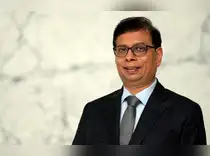
In this edition of ETMarkets Smart Talk, Shripal Shah, MD & CEO of Kotak Neo, discusses how investor behaviour has changed, why digital convenience alone is no longer enough, and how the next phase of broking will be shaped by connected investing, access to research and human expertise.
He also shares his views on the growing participation of younger investors, the expansion of investing beyond metros, and why investors should avoid chasing momentum blindly and focus on building long-term wealth. Edited Excerpts -
Kshitij Anand: How has the Indian investor changed over the last five years, and what does the investor need today that was not available in the traditional form of broking?
Shripal Shah: Of course, the investor has changed a lot in the last few years, if I were to say. Three or four things stand out starkly in terms of investment behaviour in India.
One, if you look at the shareholding of listed companies in India, investors now own more of India than foreigners do. FPI holdings, as you would know, have touched a 17-year low of around 15% in the last quarter or so. Individual investors, through mutual funds and direct equity, own around 19% of the market. So, there is a big shift.
Second, in the last five years, investors have become much younger in terms of participation. If I were to look at some data points, the median age of the NSE investor base was 38 years five years ago. Now, the median age is 33 years. In fact, if you look at the recent participation in terms of new accounts entering the market, the median age is around 28 years. So, of course, investors have become younger.
Another thing is that young investors are far more digitally savvy. They want to do things on their own. They have a lot of information at their fingertips. They are experimental and want to experiment with multiple products. They also want to access a lot of things on their own.
So, broadly, this is what has changed in terms of investor demographics in India.
Another thing is that, in the last five years, the entire shift has happened from relationship-based broking to DIY-based broking, so to speak. Within that, the first three years after the pandemic were a different phase, where everyone was making money. Everyone was buying any stock they thought was right based on their understanding, without much research. But in the last two years, we are... stuck in. So, it is a very dynamic space.
But if I were to broadly summarise, the entire landscape has changed. It is a much younger investor base that is participating in India and looking to build wealth through the Indian capital market.
Kshitij Anand: Rebranding is a very significant strategic decision. So, what has changed in terms of investor expectations that you are facing?
Shripal Shah: Yes, absolutely. I must say that it is not just a rebranding exercise for us. Had it been so, we would have done it long ago.
In fact, what we realised was that… and let me give you some background on Kotak Securities' journey.
Kotak Securities has been in the broking space for more than three decades now. It was established in 1994. We had Goldman Sachs as a partner in this firm. They brought in the best practices and institution-grade research.
Then, we were also among the earliest to launch an online trading platform, Kotakstreet.com, way back in 2001. We were early adopters of some of the products connected with the bank, including the 3-in-1 account, which we launched sometime in 2007. In 2016-17, we were among the first to offer margin trading finance in this market.
We had more than 150 branches. Even today, we have more than 1,300 franchisee partners, and we serve close to 350 locations across India.
So, that was the first phase of Kotak Securities' broking business, where we established leadership in the relationship-based business. We have more than 4,500 employees today, most of whom serve customers through these branch locations. Investors often visit branches or call their relationship managers (RMs) to place trades, seek advice and get research inputs.
The last five years have been a completely different story. That is when we realised, early in 2020, that with the Digital India Stack, things were becoming completely digital. Thankfully, some digital players had ensured early access to the Indian capital market for investors through entirely digital onboarding.
But we also realised that we needed to address the demands and expectations of new investors. That was when we realised we needed to invest heavily in digital. Looking back at the last five years, we would have spent more than ₹1,000 crore on technology and digital initiatives.
We also decided that the change should not be incremental. When building a digital platform for Indian investors, it should not be an incremental step. That was when we decided to.... We actually created a startup within our company, with a separate team. Most of the talent came from the digital product and marketing side and was recruited entirely from outside the industry as well. We brought in some of the best talent from e-commerce, quick commerce and fintech firms. The average age of this team was also below 35.
We also realised that it was not possible to create everything on our own because so much had happened in India over the last five years, including in the startup space. That was when we launched a small startup investment vertical.
Over the last five years, we invested in four or five startups in the investment-tech space, taking minority stakes in them. The idea was to create synergies and understand innovation in this space.
We also acqui-hired a couple of startups, bringing their entire teams, along with their products, onto our platform. They have built some excellent products since joining us.
So, basically, we co-created with the startup ecosystem, and it was not just about acquiring companies or taking stakes in them. I think, in this process, we would have explored opportunities with more than 100 startups in terms of investments and partnerships.
That is when we learnt that so much innovation was happening in India on the digital side. There is a new-age entrepreneur who wants to do a lot in terms of innovation, solve investors' problems and look at investing through a completely different lens. That is what made us invest in this space from scratch.
Now, I am happy to say that, in the last five years, we have come out with a mobile app and web platform that are on par with those of any digital player in the industry.
Some of our metrics, such as speed, are impressive. For instance, some of the API speeds we measure are below 50 milliseconds. According to some independent website metrics, we are the fastest in the industry. You might not even expect a traditional banking brokerage to offer that kind of speed.
It is not just about speed because speed has become a table stake. The idea is whether we are able to meet investors' expectations on a single platform.
In this process, we also created a lot of products on our platform that can help traders and investors. We also... integrated our institution-grade research into the platform. Kotak Institutional Equities, one of the most highly regarded research providers in the country, is also available on the Kotak Neo platform.
Beyond broking, we have added several products to our platform. You can always access equity, commodities, currency, derivatives, F&O and IPOs. We have also added mutual funds, PMS and IPO offerings. We launched global investing in 2020-21.
So, broadly, first, we ensured that we had a best-in-class digital platform. Second, we ensured that the platform was not limited to equities but served all the investment needs of customers, offering everything from direct equity to multiple products, be it stock baskets, mutual funds or global investing.
After that, we realised that a lot of investors had started joining us. By the way, during this period, our investor base grew twofold, and our market share in derivatives also doubled over the last five years.
So, basically, we had established ourselves in the investment space. We also created a dedicated offering for traders and developed an integrated system for overall wealth management solutions.
We then realised that we had transformed the business based on investors' needs. But was the name reflecting that? Generally, companies rebrand first and then change their businesses. We realised that we had changed the business, but the name was not reflecting the transformation we had undertaken.
Some investors were actually asking us whether we were Kotak Securities or Kotak Neo. That was when we realised that the name 'Securities' might suggest that we were only a broking firm.
Since Kotak Neo encompasses everything, from equities and investments to trading and wealth management solutions, we thought it was appropriate to have one name that reflected the work we had done and the transformation we had undertaken.
That is how we have now rebranded Kotak Neo as the retail-facing brand of Kotak Securities.
Kshitij Anand: Earlier, the bigger challenge was getting people into the markets. Today, access is much easier, thanks to government initiatives and brokerage firms like yours. What is the next big challenge you are working to address?
Shripal Shah: No, absolutely. You are bang on here. Earlier, access was a problem. If you had to participate in the capital market, your first questions were: How do I open an account? Where do I open an account? How much time will it take?
Kshitij Anand: Fifty-plus signatures were required, if I am not wrong.
Shripal Shah: Absolutely. And you had to visit a brokerage firm's branch. All these access-related problems have been solved now.
Today's investor is no longer concerned about where to open an account. With a click of a button, he or she has multiple choices and can open an account in a few minutes. So, the access problem is completely solved.
The next question investors are asking is: After accessing the market, what do I do? This is where the entire need has changed. Access is no longer a problem. What comes after access? What do I do after opening an account? This is exactly what we wanted to solve at Kotak Neo.
This is one big change. The second change is that earlier, investors were more like relationship clients who had access to a relationship manager during the first 20 years of their investment journey.
In the last five years, we have seen investors become more DIY-oriented, and the industry has evolved accordingly. New-age players have emerged and made everything DIY, with little or no human intervention.
But what we have realised is that the same investor who prefers the DIY approach is also looking for advice, a human touch and human expertise. So, it does not have to be an either-or choice.
Incidentally, the industry has evolved in a way that you either get a digital platform or a relationship-based service. But the investor is the same, and their expectations are different. They want it all.
They are not saying that just because you have given them a digital platform, they do not need research. Nor are they saying that just because you have offered discounted pricing, they do not need a relationship manager.
When the market falls, of course, you want to speak to someone and understand the overall ground reality, different thought processes and opinions.
So, broadly, the access problem has been solved. The next questions are what to do after gaining access, how to do it, and whether everything can be offered on one platform.
Today's investor expects not to have to choose between platforms or go to multiple platforms for different needs. For example, you might use one platform for digital broking, another for mutual funds and a third for wealth management. Technically, you are expanding your investments, but you now have multiple relationships, which may not be as strong as having just one relationship.
The investor's need is to have it all on one platform, one that guides them through their wealth-building journey rather than simply telling them which stock to buy.
That expectation itself has changed, and that is what we wanted to address. Thankfully, we have integrated everything, and hopefully, we will be able to meet customers' needs on this platform.
Kshitij Anand: Since COVID, we have seen many fintech firms enter the market with their own apps. As you mentioned, execution speed has also become a basic feature across platforms. Looking ahead to the next two to three years, what will differentiate one platform from another?
Shripal Shah: No, absolutely. You are right. Speed is just one factor, and with technological advancements, it has become a table stake. You will have a digital platform, and it will offer speed. Everyone will offer that. Technology is nobody's monopoly. Everybody can replicate it, and that is the minimum one has to provide.
The next change the industry needs to make, and the player that can make it will differentiate itself, is understanding what investors need today.
Investors are not coming to the market for just one product. We have started offering.... choosing products. Investors are not just looking at products; they are looking for wealth management or lifecycle management through a partner they can trust.
Let me give you an example. A young investor might start by experimenting with products such as F&O or intraday trading. But over the next three, four or five years of their life journey, they might get married and settle down with a family. Their next question would be: How do I manage my long-term wealth? How do I set my financial goals, and what should I do next?
Any platform that can offer not just one product but multiple products, along with an overall wealth management solution, will have an advantage. If investors need human expertise or access to a person at some point, our network of more than 200 branches and over 1,300 franchisees is available to them.
The player that can deliver this in a more connected way will make a difference, whether in terms of banking, investments or stock-related services.
If you can offer a connected experience where investors do not have to choose between multiple platforms, you are likely to win in this space.
Kshitij Anand: With Kotak Neo Private Client Group and Connect Plus by Kotak Neo expanding into wealth management and distribution, how do you see these businesses complementing the core retail platform?
Shripal Shah: If you look at any investor's life-cycle journey, they start small. They might dabble in trading initially, but then they start investing through SIPs. As their portfolio grows, they need someone to advise them or provide insights into how they can build wealth through various products.
As investors, they also ask whether mutual funds and direct equity are the only solutions. They want to diversify, and given the current market volatility, diversification is the need of the hour. You cannot simply buy a few smallcap or midcap stocks and say that you have created an investment portfolio.
You want to invest not only in largecaps, smallcaps and midcaps but also in multiple products, whether mutual funds, AIFs, SIFs, stock baskets, or investments in India and overseas through global investing.
Investors want to ensure that they are well diversified, and diversification can be achieved if they have access to multiple products. They can also invest across asset classes. Apart from equity, they may want to invest in debt, bullion and even gain exposure to the commodity segment.
Diversification is what interests investors in their overall wealth management journey. As investors progress in life, they eventually need a wealth manager to connect with. That is where Kotak Neo PCG comes into play. Many investors want to build their portfolios seriously, in a way that takes care of their overall life-cycle needs. Through Kotak Neo PCG, we have more than 1,000 dealers and relationship managers (RMs) across India to serve investors who want to build their wealth over time.
Kotak Connect Plus is another interesting offering. It operates in the B2B2C space. As I mentioned, we acqui-hired a startup called Kotak Connect Plus. That startup had many independent financial advisers across India, particularly in remote towns, who were helping small-town investors access mutual funds and various financial products.
Through this platform, we are helping financial distributors access all the products available on the Kotak Neo platform. They get access not only to simple SIPs but also to stock baskets and other products.
The beauty of this connected platform is that an investor in a small town who accesses the market through a nearby financial adviser is not limited to just a few products. The entire bouquet of products we offer through our Private Client Group is also available to them.
We have a platform that helps these advisers understand the products and curate suitable offerings for retail investors in remote locations. The platform essentially helps us reach remote parts of India, enabling us to take investment opportunities to the country's most distant corners.
Kshitij Anand: Are most of your new investors coming from Tier II and Tier III cities?
Shripal Shah: Absolutely. On our platform, we have seen that, in the recent past, two out of every three investors we have acquired are from beyond Tier I cities. They are coming from Tier II and Tier III cities. So, around 67% of the investors we are acquiring come from Tier II and Tier III cities.
Kshitij Anand: So, the financialisation of savings is really happening?
Shripal Shah: Absolutely. It is happening, yes.
Kshitij Anand: Lastly, if you could change one behaviour among Indian investors to have the greatest impact on their long-term wealth, what would it be?
Shripal Shah: Based on my recent experience over the last five years, I would say that the Indian capital market has been relatively stable. If you look at the earlier phase of the capital market in India, over the last 20 years, there were some major market shocks, so to speak, when significant falls occurred, including during black swan events.
However, the first three years after the pandemic saw investors make a lot of money in momentum stocks. They were driven by certain market trends or narratives. The mindset was: if everyone is buying, let me buy something too.
One thing I would advise investors is not to chase momentum blindly. You should understand why you are buying a stock. You should not buy it simply because someone else is buying it or because everyone else is doing so.
You should also ask yourself: if the stock you have bought falls 20% tomorrow, will you panic or hold on to it? If you understand the stock and its fundamentals, you should not be overly worried because this is a long-term market. You cannot make money every month.
So, my first suggestion would be not to chase momentum blindly and to understand what you are investing in.
Second, do not expect big returns every month because investing is a patient game. You have to be patient, and patience pays.