
Global Market: European automakers get earnings boost as Chinese competition weighs on recovery
 Agencies
Recent earnings offer some relief, but European carmakers still face mounting competition and deep-rooted industry challenges.
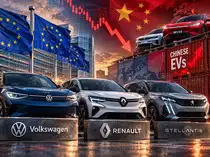
Volkswagen, Stellantis and Renault have managed to arrest a prolonged decline in their share prices as they pursue strategies to rebuild investor confidence. These include expanding electric vehicle line-ups, cutting costs, restructuring operations and forging new partnerships.
However, investors remain concerned about whether Europe's established carmakers can restore the profitability and market valuations they once commanded. According to Reuters, growing competitive pressure and uncertainty over the industry's future are making it difficult to identify a clear catalyst for a sustained recovery.
Massimo Baggiani of London-based Niche Asset Management, which holds positions in Renault, BMW, Mercedes-Benz, Volkswagen and Stellantis, said investor scepticism remained widespread, with few obvious triggers for a long-term turnaround.
European Auto Stocks Remain Under Pressure
Europe's automotive sector index is hovering near levels last seen in late 2020, when the COVID-19 pandemic disrupted supply chains and weakened demand.
The industry is now grappling with a different set of challenges as Chinese manufacturers, including BYD and Geely, gain ground in electric vehicles and compete aggressively on pricing, technology and software.
Chinese automakers have rapidly improved their cost competitiveness, putting pressure on European manufacturers that face higher production costs and the expense of transitioning away from conventional vehicles.
The shift is reflected in Volkswagen's market performance. When the German automaker's shares peaked in 2021, Chinese carmakers had only a negligible presence in the European market. By the middle of 2026, their share had climbed above 10%, according to the figures cited in the Reuters report.
Over the same period, Volkswagen's stock market value declined by around three-quarters, with tariff-related uncertainty adding to the pressure.
Jefferies analyst Philippe Houchois said worsening competitive pressures were making it increasingly difficult for investors to assess how far European automakers' businesses and valuations could fall.
Chinese manufacturers are gaining market share both domestically and internationally, intensifying concerns about the ability of European companies to defend their positions and restore sustainable growth.
Carmakers Seek Support From Brussels
Facing pressure from lower-cost Chinese imports, Volkswagen, Stellantis and Renault have called on the European Union to introduce measures supporting the region's automotive industry.
The manufacturers are seeking assistance as policymakers consider proposed incentives for local production, with the debate centred on strengthening Europe's industrial base and improving the competitiveness of domestic manufacturers.
Renault CEO Francois Provost told Reuters that the European Union needed to act urgently to support the sector. Without effective measures, he warned, continued imports from China could further undermine European manufacturers and threaten the industry's long-term viability.
The industry's appeal highlights the growing importance of government policy as European automakers navigate the transition to electric vehicles, rising investment requirements and competition from manufacturers with lower cost structures.
However, policy support alone may not resolve the underlying challenges. Carmakers must also improve operational efficiency, develop competitive electric models and keep pace with advances in automotive software and technology.
Volkswagen and Stellantis Pursue Major Turnarounds
Despite the industry's difficulties, some investors believe the selloff has become excessive, arguing that European automakers retain substantial industrial assets and financial resources.
Baggiani noted that the growing concentration of investment in artificial intelligence companies and stocks had diverted capital away from other sectors, including automotive. This could be amplifying the pressure on manufacturers already struggling with structural challenges.
Volkswagen has launched the largest restructuring programme in its history, including plans to cut around 100,000 jobs and potentially close plants in Germany.
The restructuring reflects the scale of the company's challenges as it seeks to reduce costs, improve efficiency and adapt its operations to changing market conditions.
Stellantis, whose portfolio includes Fiat, Peugeot and Jeep, is pursuing a turnaround based on new vehicle launches, changes to its brand strategy and partnerships with Chinese automakers.
These measures are intended to strengthen its product offering, improve competitiveness and address weaknesses that have weighed on its financial performance.
Renault is also working to strengthen its market position as competition intensifies and the industry transitions towards electric mobility.
Recent earnings reports have provided some encouragement for investors, suggesting that restructuring and cost-cutting efforts could begin to yield results.
Stellantis shares surged 15% in a single trading session on Wednesday after its third-quarter results, supported by confidence that the company could exceed its cost-reduction targets.
Volkswagen and Renault also recorded modest gains after their shares had fallen to multi-year lows.
The market reaction indicates that investors remain willing to reward signs of improved operational performance, particularly when companies demonstrate progress on cost controls and business restructuring.
However, the gains have yet to establish that the sector has reached a durable turning point. Automakers continue to face pressure from Chinese rivals, the costs of technological transformation and uncertainty over the future structure of the European car market.
Analysts caution that recent share-price recoveries may offer little more than temporary relief unless manufacturers can demonstrate sustained improvements in competitiveness and profitability.
Structural Challenges Cloud Long-Term Outlook
The central challenge for European automakers is that the industry's difficulties extend beyond a temporary downturn in demand or a cyclical earnings slowdown.
Chinese manufacturers are reshaping competition through lower-cost production, rapid product development and advances in electric vehicle technology. European companies must respond while managing legacy manufacturing operations, restructuring costs and substantial investments in new technologies.
At the same time, uncertainty over trade policy and the pace of the electric vehicle transition complicates investment decisions and makes it harder for companies to plan their production strategies.
Houchois of Jefferies warned that the sector could remain under pressure for an extended period, with companies continuing to operate despite persistent structural weaknesses.
For investors, the recent earnings-driven gains in Volkswagen, Stellantis and Renault offer some evidence that turnaround efforts may be gaining traction. However, a lasting recovery will depend on whether these manufacturers can translate restructuring initiatives into stronger margins, regain market share and compete effectively with Chinese rivals.
Until those improvements become more evident, Europe's traditional automakers may continue to face a difficult combination of depressed valuations, competitive pressure and uncertain long-term growth prospects.