
India-US trade pact in last leg of legal drafting, says Piyush Goyal
 PTI
PTIGoyal said the free trade pact between India and the EU would be signed in December and come into force in February or March next year.
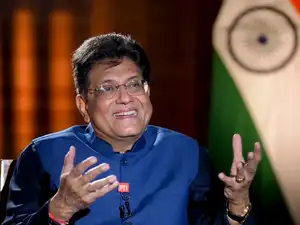
Earlier this month, US trade representative Jamieson Greer said both sides were working to conclude the deal, but an agreement was not imminent. "The US bilateral trade agreement's first tranche has been finalised, and it is going through final contours, the legal drafting, and we hope to be able to finalise that soon and operationalise that once we get comparable advantage or competitive advantage over our peer countries," Goyal said at the inauguration of the Centenary Conclave at Shri Ram College of Commerce.
The US remained India's largest merchandise export destination in the first half of the current fiscal year.
Commerce secretary Rajesh Agrawal said negotiations for the proposed India-US trade agreement were progressing in the right direction, with both countries working to conclude the deal at the earliest.
"The negotiations are in the right direction. Probably, we are in a very good zone. We anticipate closing the deal and signing it at the earliest possible time," Agrawal said.
He said the agreement would depend on the finalisation of the broader US tariff framework, with a parallel process underway under Section 301.
"The deal has to be signed when the overall tariff structure is getting formalised. There is parallel work being done in the US also to get back the tariff structure based on some of the outcomes of the 301," Agrawal said.
India would seek tariff stability, he said, adding that the number of outstanding issues had declined over time.
On the ongoing Section 301 investigation into excess capacity, Agrawal said: "We don't have visibility beyond a point of time" but added that India supported the US in its "priority issues" at the G20 as "these excess capacities are driven by non-market economies".
Last week, India joined 14 other economies, including the US, the EU and the UK, in signing a joint ministerial statement aimed at curbing structural excess capacity and production, even as Indian manufacturing remains under US scrutiny.
Agrawal said India was seeking preferential access to the US market to ensure its exporters could compete effectively with those from other countries.