
India will gain strong comparative advantage after US trade deal: Piyush Goyal
Listen to this article in summarized format
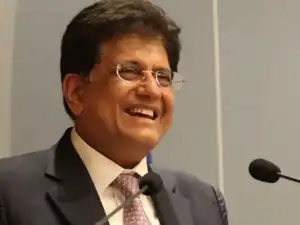 ANI
Goyal said he had not come across anyone who could find a flaw in any of the eight concluded free trade agreements (FTAs) whose details had been made public. He said the ninth, the proposed US free trade deal, was sometimes being politicised by certain elements, even though its details were not yet fully available.
“I don't know what they criticise, but I have the courage of conviction to announce that once details of the US trade deal are out, the people of India will celebrate that not a single sensitive interest of our farmers or any stakeholder has been compromised,” Goyal said.
“On the contrary, India will stand at a very strong comparative advantage. And trade is about comparative advantage,” he added.
Goyal's remarks come as both countries work towards finalising the proposed trade agreement.
US Secretary of State Marco Rubio had earlier indicated that the India-US trade deal was close to being finalised, with only a few issues left to be resolved. His remarks came after a meeting with External Affairs Minister S Jaishankar in Mumbai.
“We’re very, very close. I would say we’re about as close as you can be without having executed the agreement. I think there’s a small number of items left to wrap up, so I think that will happen shortly,” Rubio told reporters, according to the Associated Press.
Goyal, too, had made a similar comment last week. He said the first tranche of the agreement was in its final stages. Most of the discussions had been completed, he said, with both sides now working through the finer details. He also reiterated that the interim agreement would fully safeguard the interests of Indian farmers.
The negotiations, however, have not been without hurdles. Differences over US tariffs and India's continued purchases of Russian oil have slowed progress. Washington had imposed tariffs of up to 50% on most Indian goods in August 2025 after talks broke down. The two sides agreed on a framework in February 2026 that brought the tariff rate down to 18%, but negotiations subsequently stalled.
Earlier this month, Finance Minister Nirmala Sitharaman acknowledged the slowdown, saying the talks had “plateaued”. New Delhi has maintained that the final tariff rate for Indian goods should be broadly in line with those faced by competing manufacturing economies, including Vietnam.
Rubio said he and Jaishankar had also discussed energy security and defence cooperation during their meeting.