
MoSPI conducting new surveys to improve economic data: Secretary Saurabh Garg
 ANI
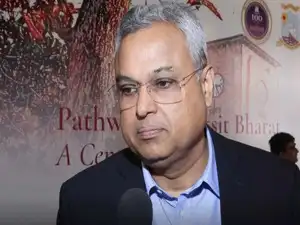
ANIMoSPI is expanding surveys and refining GDP methodology to improve India's economic data, as Secretary Saurabh Garg expressed confidence in growth while flagging inflation concerns and gaps in measuring non-market activities.
New Delhi: The Ministry of Statistics and Programme Implementation (MoSPI) is conducting new surveys, including one on cooperatives, as part of its efforts to improve economic data and identify areas requiring further improvement in the country's statistical system, Saurabh Garg, Secretary of the ministry, said on Friday.
"We are doing some other new surveys. We have done a survey on cooperatives on what they are doing. And therefore, we are always looking for areas where we need to further improve," Garg told on the sidelines of the Pathways to Viksit Bharat event.
Garg also referred to the Index of Service Production while discussing the ministry's statistical work.
On economic growth, Garg said India had consistently recorded growth of 7-8 per cent over the past three years, while gross domestic product (GDP) grew by 7.8 per cent in the first quarter of the current financial year.
"If you look at the last three years' data, we have been consistently growing at between 7-8 per cent. The first quarter is also at 7.8 per cent. There have been several interventions that have been done by the government to ensure that the growth remains vibrant. And I am very confident that these numbers should stand up in future too," he said.
Asked about the second-quarter growth figures, Garg said he would not be able to comment on the numbers. He expressed confidence in the growth trend, citing the country's performance over the preceding three years.
On inflation, he said it remained a matter of concern but added that government interventions had helped keep it within manageable limits.
"Obviously, inflation is a matter of concern. But I think the different interventions that have been done have ensured that inflation remains within manageable limits. Many measures have been taken in the past. And different agencies are working to ensure that the impact of inflation on the general public and general citizens is minimised," he said.
Garg also stressed that GDP, while a useful measure of economic activity, needed to be supplemented by other indicators to provide a broader picture of the economy.
"GDP is a single economic indicator, which gives an idea of different sectors of the economy. So, it's a good measure. It's the best of the available measures. But obviously, improvements can always be made in that," he said.
He highlighted the need to improve the measurement of non-market activities, including the care economy and household work, which are not fully captured by conventional GDP measures.
"It is an excellent measure for economic activities, but there are a lot of social issues involved. And therefore, you need to always complement GDP by looking at other data points and other indicators also," he said.
On changes to national accounts methodology, Garg said MoSPI had introduced double deflation to improve the measurement of value addition in manufacturing.
"Double deflation is a methodology that we have introduced this time. It is internationally recognised as the right mechanism to ensure that we capture the value addition in manufacturing better," he said, adding that the approach reflected an improvement in methodological practices in comparison with global standards.
"We are doing some other new surveys. We have done a survey on cooperatives on what they are doing. And therefore, we are always looking for areas where we need to further improve," Garg told on the sidelines of the Pathways to Viksit Bharat event.
Garg also referred to the Index of Service Production while discussing the ministry's statistical work.
On economic growth, Garg said India had consistently recorded growth of 7-8 per cent over the past three years, while gross domestic product (GDP) grew by 7.8 per cent in the first quarter of the current financial year.
"If you look at the last three years' data, we have been consistently growing at between 7-8 per cent. The first quarter is also at 7.8 per cent. There have been several interventions that have been done by the government to ensure that the growth remains vibrant. And I am very confident that these numbers should stand up in future too," he said.
Asked about the second-quarter growth figures, Garg said he would not be able to comment on the numbers. He expressed confidence in the growth trend, citing the country's performance over the preceding three years.
On inflation, he said it remained a matter of concern but added that government interventions had helped keep it within manageable limits.
"Obviously, inflation is a matter of concern. But I think the different interventions that have been done have ensured that inflation remains within manageable limits. Many measures have been taken in the past. And different agencies are working to ensure that the impact of inflation on the general public and general citizens is minimised," he said.
Garg also stressed that GDP, while a useful measure of economic activity, needed to be supplemented by other indicators to provide a broader picture of the economy.
"GDP is a single economic indicator, which gives an idea of different sectors of the economy. So, it's a good measure. It's the best of the available measures. But obviously, improvements can always be made in that," he said.
He highlighted the need to improve the measurement of non-market activities, including the care economy and household work, which are not fully captured by conventional GDP measures.
"It is an excellent measure for economic activities, but there are a lot of social issues involved. And therefore, you need to always complement GDP by looking at other data points and other indicators also," he said.
On changes to national accounts methodology, Garg said MoSPI had introduced double deflation to improve the measurement of value addition in manufacturing.
"Double deflation is a methodology that we have introduced this time. It is internationally recognised as the right mechanism to ensure that we capture the value addition in manufacturing better," he said, adding that the approach reflected an improvement in methodological practices in comparison with global standards.