
Over half of street vendors may cut UPI acceptance if 0.4% MDR is introduced: ISB study
Listen to this article in summarized format
 ANI
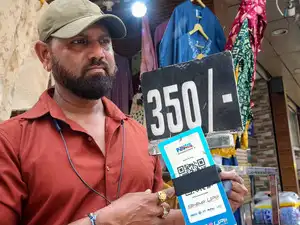
The likelihood of reducing UPI acceptance was higher among vendors in Tier 1 cities, at 53%, compared with 45% in Tier 2 cities, according to preliminary findings of a study by ISB's Centre for Analytical Finance (CAF).
The study, conducted by Prasanna Tantri, Anand Sudhakaran and Mohan Ramanath, was based on a telephonic survey of 722 randomly selected street vendors across 14 states and Union Territories between September 24 and October 10, 2026. The sample covered vendors across 64 urban local bodies.
The research examined how vendors could respond to the proposed 0.4% MDR on UPI transactions exceeding ₹2,000. While most retail transactions were below this threshold, around 70% of surveyed vendors made bulk purchases from suppliers involving payments above ₹2,000, Sridharan, who presented the findings, said.
Supplier payments pose bigger concern
The findings suggest that the proposed charge could have a more significant bearing on vendor-supplier transactions than on payments received from customers.
Around 67% of surveyed vendors currently accept UPI payments, while only 52% were aware of the proposed MDR. More than half said they would reduce UPI acceptance if the charge were introduced.
The study also found that vendors facing additional charges from suppliers were more likely to pass on the cost to customers. Around 30.8% of vendors who had encountered such surcharges said they would transfer the additional cost to customers, compared with 16.2% among those who had not faced them.
Researchers also found a greater inclination among vendors with high-value supplier transactions to shift to cash payments to avoid the proposed levy.
Responding to a question on whether vendors would prefer switching to cash or passing on the cost to customers, Tantri said the key concern was the difficulty of avoiding large-value supplier payments. For vendors making such transactions, the additional charge could account for a significant share of their daily net margins, making a switch to cash more attractive.
Digital transaction data benefits need to be considered
Tantri said the study had not examined specific alternatives to the proposed MDR. However, he argued that the existing accounting of payment costs did not adequately factor in the benefits generated by digital transaction data.
He also cautioned that a shift towards cash-based transactions could undermine some of the benefits of government initiatives such as PM SVANidhi.