
Supply shocks to weaken monetary policy effectiveness: CEA
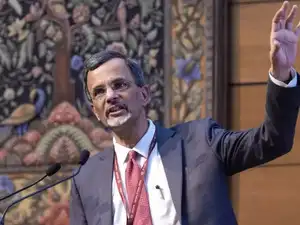 PTI
New Delhi: Chief Economic Advisor V Anantha Nageswaran on Friday said monetary policy tools such as interest rate adjustments may become less effective in tackling inflation in a world increasingly vulnerable to supply-side disruptions.
"Fiscal and other public policy measures will be more important because raising interest rates will not solve the supply-induced problems. If anything, it may even be counter-productive," he said at the 9th Annual Food Systems Dialogue here.
Amid persistent supply induced issues, countries will have to use all kinds of flexibilities with regards to the inflation targeting framework, he said.
"Since 2022, very few countries have met their inflation target. So, it will be there as a framework, but I think countries will take creative liberties with it, as they have to," he added.
Supply chain disruption following the Russia-Ukraine war, which has been ongoing since February 2022, followed by the West Asia crisis, has resulted in soaring prices, especially energy prices across the world.
In a bid to rein in inflation, major central banks across the globe, including the US Federal Reserve, have hiked interest rates.
Even the Reserve Bank last month raised the repo rate by 25 bps to 5.50 per cent for the first time in nearly four years to tame inflation, which crossed the central bank's upper tolerance band of 6 per cent in October.
This is the first time in two years that retail inflation has breached the RBI's upper tolerance band of 6 per cent. The central bank is mandated to keep inflation within the range of 2-6 per cent. In October 2024, retail inflation was 6.25 per cent.
Quoting some reports, Nageswaran said supply shocks will dominate the world over the next 25-30 years, or even longer.
"As countries weaponise supply chains and use natural waterways and other choke points, the ability to solve these problems by simply cutting or raising interest rates will no longer be feasible," he said.
In such a scenario, Nageswaran called for bringing agriculture back as the main driver or engine of economic growth.
He further flagged that the emergence of artificial intelligence and immigration restrictions in different countries may slow down job creation in the services sector.